Temiyavada Jataka
Temiyavada Jataka
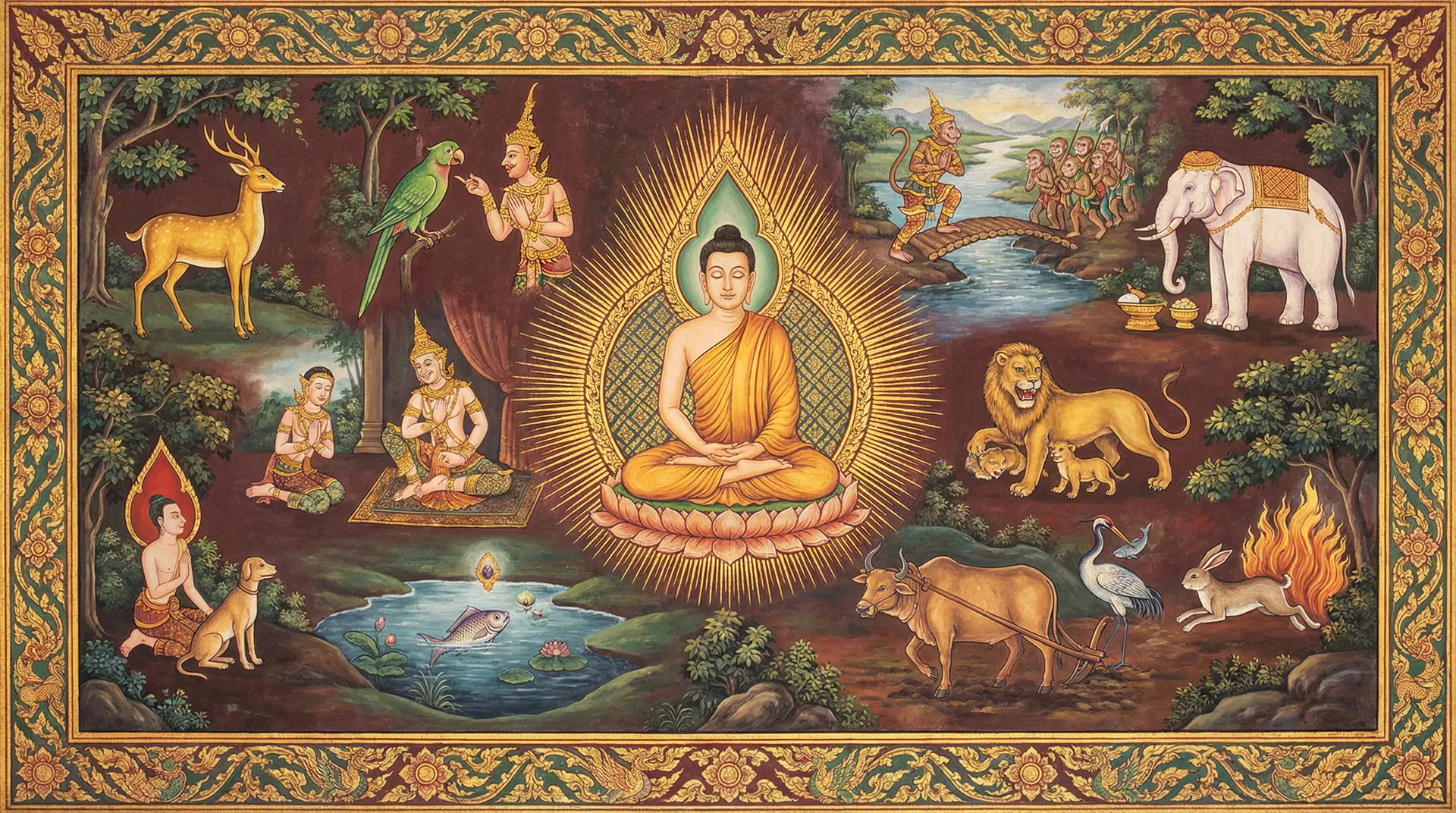
In the kingdom of Supparaka, there was a prince named Temiya. From the moment of his birth, an aura of profound detachment and weariness enveloped him. While other children delighted in play and worldly pursuits, Prince Temiya found no joy in them. He was born with a deep, inexplicable sorrow, a profound understanding of the impermanence of all things. His parents, the King and Queen, were perplexed and deeply saddened by their son's melancholy.
As Prince Temiya grew, his detachment only intensified. He witnessed the suffering, the greed, and the deceit that permeated the world, and it filled him with a deep aversion to worldly life. He saw the endless cycle of birth, decay, and death, and he yearned for liberation from this suffering. Despite all the efforts of his loving parents to engage him in royal duties, to entice him with pleasures, and to impress upon him the importance of his princely heritage, Prince Temiya remained unmoved.
One day, his parents, desperate for a solution, consulted a wise old hermit who lived in the forest. The hermit, after listening to their tale, advised, "Your son's mind is attuned to a higher reality. He sees the futility of worldly existence. Do not force him into a life he abhors. Instead, let him pursue his own path. Perhaps, by understanding his true desire, you can find a way to ease his sorrow."
Taking the hermit's advice, the King and Queen decided to grant Prince Temiya his freedom. They allowed him to withdraw from royal duties and to spend his days in quiet contemplation. Prince Temiya, overjoyed, found solace in solitude. He meditated deeply, contemplating the nature of suffering and the path to enlightenment. He realized that the true escape from the cycle of rebirth lay in complete renunciation, in the eradication of all worldly attachments.
One night, as the moon cast a silvery glow over the sleeping kingdom, Prince Temiya made a momentous decision. He would leave the palace, leave his royal life, and embark on a path of extreme asceticism, a path that would lead him to ultimate liberation. He donned simple robes, took nothing with him but his inner resolve, and quietly slipped out of the palace gates. He wandered through forests, meditated under trees, and lived on meager alms, dedicating himself to the pursuit of spiritual truth.
His parents, upon discovering his departure, were devastated. They sent out search parties, their hearts filled with anguish. They pleaded with him to return, to assume his rightful place as king and bring joy back to their lives. But Prince Temiya, though he loved his parents dearly, knew that his true duty lay in seeking liberation for himself and, ultimately, for all beings. He understood that his renunciation was not an act of selfishness, but an act of profound compassion, for by achieving enlightenment, he could eventually guide others to the same path.
His journey was arduous, filled with challenges and temptations. Yet, Prince Temiya's resolve never wavered. He faced his own mind, his own doubts, and his own fears, and through sheer determination and wisdom, he gradually detached himself from all worldly concerns. He realized that true happiness and freedom were not found in external possessions or royal titles, but in the internal state of equanimity and detachment. His steadfastness in renouncing the allure of kingship and worldly pleasures became a beacon of hope for those seeking liberation from suffering. He eventually achieved a state of profound peace and understanding, a testament to the power of detachment and the pursuit of spiritual truth above all else.
— In-Article Ad —
💡Moral of the Story
True freedom and peace are found not in worldly possessions or status, but in detachment from suffering and the dedicated pursuit of spiritual liberation.
Perfection: Renunciation (Nekkhamma)
— Ad Space (728x90) —
More Jataka Tales You May Enjoy
 167Dukanipāta
Kumbha Jātaka
Kumbha JātakaIn the ancient city of Mithila, where bustling markets teemed with exotic goods and gra...
💡 True security and happiness are found not in hoarding possessions, but in generosity and sharing with others, especially during times of need.
 387Chakkanipāta
Sutasoma Jataka
Sutasoma JatakaIn a kingdom nestled between whispering mountains and a shimmering sea, there lived a...
💡 Wisdom and compassion are more powerful than brute force. True liberation comes from understanding and overcoming ignorance.
 13Ekanipāta
The Steadfast Brahmin
The Steadfast BrahminIn the ancient city of Varanasi, a beacon of spiritual learning, lived a devout...
💡 Unwavering steadfastness and a pure heart can inspire others and lead to rebuilding.
136EkanipātaPanchavudha Jataka
The Tale of the Five WeaponsIn the ancient city of Varanasi, nestled beside the sacred Ganges River,...
💡 True fulfillment and invincibility are not found in external possessions or power, but in the cultivation of inner virtues like truth, compassion, generosity, patience, and wisdom.
71EkanipātaThe Jataka of the Clenched Fist
In a time long past, in the prosperous city of Varanasi, the Bodhisatta was born as a young Brahmin ...
💡 True leadership lies in protecting the vulnerable, even at great personal risk.
32EkanipātaThe Bodhisatta as a Compassionate King
The Bodhisatta as a Compassionate KingIn the prosperous kingdom of Avanti, renowned for its fertile ...
💡 True leadership is defined by profound compassion, and tending to suffering with kindness can overcome calamities.
— Multiplex Ad —